
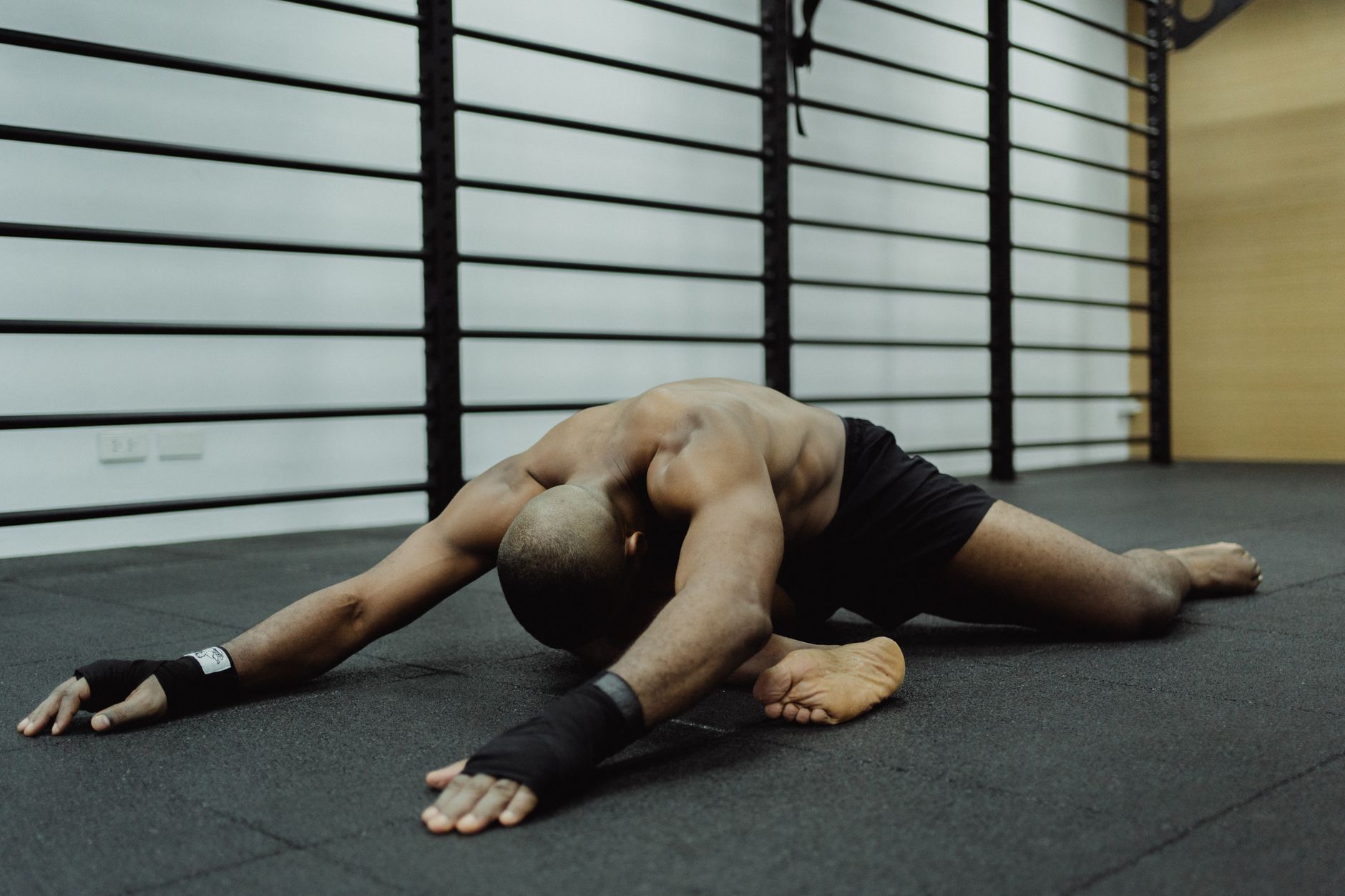


Hip pain is incredibly common, especially if you sit for long periods, run, lift weights, or have recently increased your activity level. And one of the first things most people do when their hips start bothering them is stretch.
But what if your Hip pain doesn’t actually need more stretching?
Sometimes a muscle feels “tight” because it truly has limited mobility. Other times, that tight feeling can be related to weakness, fatigue, or the body trying to create stability around an area that isn’t being adequately supported.
And very often, Hip pain accompanies reduced mobility and strength, requiring some attention.
Understanding the difference can help you choose exercises that actually address the problem instead of endlessly stretching something that keeps feeling tight.
First: Where Does Your Hip Hurt?
“Hip pain” can mean several different things.
Pain at the front of the hip or groin may involve the hip flexors or structures within the hip joint itself.
Pain along the outside of the hip is often associated with the muscles and tendons that stabilize the pelvis, particularly the gluteus medius and surrounding tissues.
Pain in the back of the hip or buttock may involve the glutes, deep hip rotators, hamstrings, or sometimes the lower back.
The location of the discomfort is useful information, but it isn’t enough by itself to diagnose the cause.
Is Your Hip Actually Tight?
A truly restricted hip usually shows up as a loss of range of motion.
Try comparing one side with the other.
Hip Flexion Test
Lie on your back and gently pull one knee toward your chest while keeping the opposite leg relaxed.
Does one hip stop noticeably sooner than the other? Do you feel a strong restriction rather than simply a stretch?
Hip Rotation
Sit with your knees bent to approximately 90 degrees and gently rotate the hip inward and outward.
Again, compare sides.
If one side consistently has noticeably less comfortable range of motion, mobility may be part of the issue.
That doesn’t necessarily mean you should aggressively stretch it. Gentle mobility work combined with strengthening is often a better approach.e.
What If the Hip Feels Tight but Is Actually Weak?
This is where things get interesting.
Muscles don’t only feel tight because they’re shortened. A muscle that is working overtime to stabilize an area can also feel tense, stiff, or chronically “tight.”
You stretch it.
It feels better for 20 minutes.
Then the tightness comes right back.
That can be a clue that stretching alone isn’t addressing the problem.
For example, weakness or poor endurance in the glutes—particularly the muscles responsible for stabilizing the pelvis—may cause other muscles around the hip to compensate.
Signs Strength May Be Part of the Problem
You might notice:
- Your pelvis drops or shifts when standing on one leg.
- Your knee collapses inward during squats, lunges, or step-downs.
- One side feels significantly less stable during single-leg exercises.
- Your hip becomes achy or fatigued after walking, running, or standing.
- Stretching provides temporary relief, but the tight feeling repeatedly returns.
- You have difficulty feeling your glutes working during hip-dominant exercises.
None of these automatically proves that a particular muscle is weak, but they can be useful clues.
A Simple Single-Leg Check
Stand near a wall or countertop and balance on one leg.
Then perform a few slow, shallow single-leg squats or step-downs.
Watch what happens.
Does your pelvis remain relatively level? Does your knee track in roughly the same direction as your toes? Can you control the movement without your body dramatically shifting to one side?
Then compare it with the other leg.
A noticeable difference in control or endurance may suggest that strengthening the hip stabilizers could be beneficial.your sneakers, get moving, and start working towards a healthier, happier you!
What Should You Do If Your Hips Are Tight?
Rather than spending 20 minutes holding aggressive stretches, try incorporating controlled mobility.
90/90 Hip Rotations
Sit with both knees bent and slowly rotate them from side to side.
Move through the range you can comfortably control rather than forcing yourself deeper.
Try: 8–10 slow repetitions per side.
Half-Kneeling Hip Flexor Stretch
Kneel with one knee down and gently tuck your pelvis underneath you. Shift forward slightly until you feel a stretch through the front of the hip.
Avoid excessively arching your lower back.
Try: 20–30 seconds, 2–3 times per side.
Adductor Rock-Back
Start on your hands and knees and extend one leg out to the side. Slowly sit your hips backward while keeping your spine relatively neutral.
Try: 8–12 controlled repetitions per side.
Mobility should generally feel like a stretch or mild discomfort—not sharp pain, pinching, or catching.
What Should You Do If Your Hips Are Weak?
Strengthening doesn’t need to be complicated.
Glute Bridge or Hip Thrust
These strengthen the gluteus maximus, which plays a major role in hip extension.
Start with body weight and progress by adding resistance.
Try: 2–3 sets of 10–15 reps.
Side-Lying Hip Abduction
Lie on your side with your bottom leg bent and top leg relatively straight. Lift the top leg without rolling your pelvis backward.
You should primarily feel the side of your hip working.
Try: 2–3 sets of 10–15 reps per side.
Lateral Band Walk
Place a resistance band around your thighs or ankles and take controlled steps sideways while keeping tension on the band.
Keep your knees tracking over your feet rather than allowing them to collapse inward.
Try: 10–15 steps in each direction.
Step-Ups
Step onto a stable platform and drive through the working leg rather than pushing aggressively from the foot that’s still on the floor.
Control the movement on the way back down.
Try: 2–3 sets of 8–12 reps per side.
Romanian Deadlift
RDLs strengthen the glutes and hamstrings while teaching you to control a hip-hinge movement.
Start light and focus on moving through the hips rather than trying to reach the weight toward the floor.
Try: 2–3 sets of 8–12 reps.
What If You’re Both Tight AND Weak?
This is extremely common.
In that case, don’t choose between stretching and strengthening.
Do both.
A simple routine might look like:
- 90/90 hip rotations — 8 reps per side
- Hip flexor stretch — 30 seconds per side
- Glute bridges — 12–15 reps
- Lateral band walks — 10 steps each direction
- Step-ups — 10 reps per side
- Romanian deadlifts — 8–12 reps
You can think of mobility as helping you access movement and strength training as helping you control and tolerate that movement.
You need both.
Don’t Forget About Your Core
Your hips don’t operate independently.
The muscles surrounding your pelvis and trunk work together to control your body when you walk, run, climb stairs, squat, and lift.
Exercises such as dead bugs, bird dogs, Pallof presses, farmer carries, and side planks can help improve trunk and pelvic control.
This doesn’t mean hip pain is caused by a “weak core.” It simply means that improving the entire system can sometimes be more useful than focusing exclusively on the spot that hurts.
More Stretching Isn’t Always Better
One of the biggest misconceptions about hip pain is:
“It feels tight, so I need to stretch it.”
Maybe.
But if you’ve been stretching the same area every day for months and it continually tightens back up, consider changing your strategy.
Your body may need greater strength, control, or tolerance—not simply greater flexibility.
Instead of asking:
“How do I stretch this?”
Try asking:
“Why does this area keep feeling like it needs to be stretched?”
That’s often a much more useful question.
When Hip Pain Should Be Evaluated
Exercise can help with many common aches and pains, but not every hip problem should be self-treated.
Consider seeing a physician or physical therapist if you experience significant or worsening pain, pain after a fall or injury, inability to comfortably bear weight, substantial loss of motion, persistent night pain, numbness or weakness, or symptoms that don’t improve despite modifying your activity.
Sharp catching, locking, or significant groin pain also deserves professional evaluation.
And remember: pain doesn’t automatically mean something is damaged. But persistent pain is information worth paying attention to.
The Bottom Line
If your hips constantly feel tight, stretching may be part of the solution—but it probably shouldn’t be your entire solution.
Look at the bigger picture:
Do you have adequate mobility?
Do you have adequate strength?
Can you control that range of motion?
Is one side noticeably different from the other?
Are your workouts or daily habits repeatedly irritating the area?
For many people, the most effective approach isn’t simply getting more flexible.
It’s developing hips that are mobile enough to move well and strong enough to handle what you’re asking them to do.
At Stronger You Fitness, the goal isn’t just to make an uncomfortable area temporarily feel better. It’s to build a stronger, more capable body so you can keep doing the things you enjoy.
Become a Stronger You

